
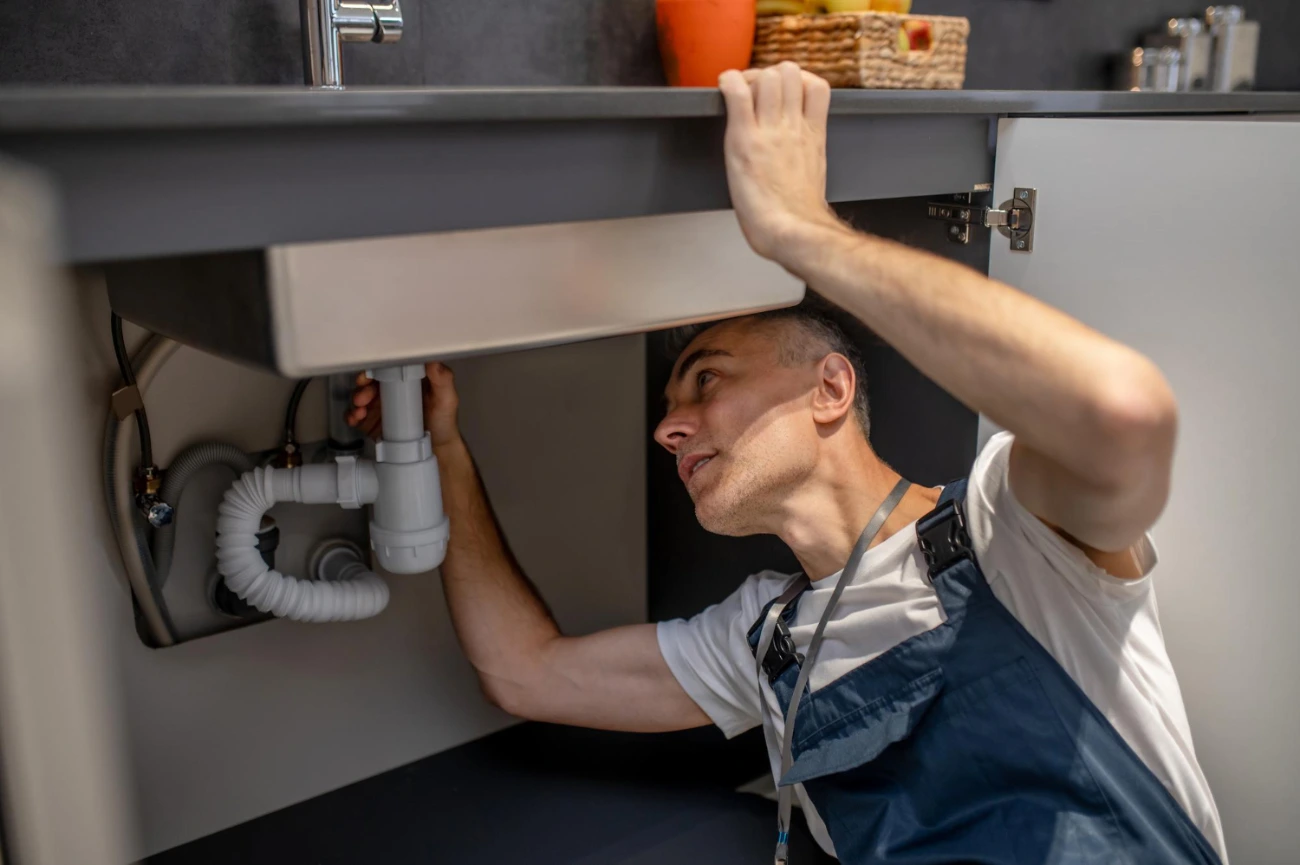
See Exactly What Is Inside Your Abilene Sewer Line Before It Becomes a $50,000 Problem
Clay tile sewer sections from the 1950s-1970s. Root intrusion from Abilene’s mesquite trees. Permian Basin clay movement cracking joints every season. A sewer camera inspection shows exactly what is there — before it fails. Required before any home purchase in Abilene. Recommended for any home built before 1990.
Why Abilene Sewer Lines Fail
Three Conditions That Attack Abilene Sewer Lines Simultaneously
Abilene’s aging housing stock, Permian Basin geology, and native vegetation create a combination that produces sewer line failures at a rate well above the Texas average. Most go undetected until the line backs up completely — by which point the repair cost has multiplied significantly. A camera inspection finds the problem while it is still a repair, not a replacement.
Why do sewer lines fail more often in Abilene than in newer Texas cities?
Clay Tile Sewer Pipe
Clay tile was the standard sewer pipe material in Abilene from the 1920s through the mid-1970s. It is porous, brittle under sustained ground movement, and has spigot-and-bell joints that open under seasonal clay expansion. Abilene’s Permian Basin clay moves significantly enough each season to separate these joints by 1/4 inch or more — creating entry points for roots and exit points for sewage into the surrounding soil.
Mesquite Root Intrusion
Mesquite is the dominant tree species across Taylor County and is notorious for aggressive, shallow lateral root systems that can extend 50+ feet from the trunk in search of water. Sewer lines — which carry warm, moist air even when no sewage is flowing — are a primary mesquite root target. Once roots enter a joint crack, they expand with each growth cycle and can completely block a 4-inch lateral within 2-3 years of initial entry.
Seasonal Ground Movement
Every spring rain saturates Abilene’s clay soil and causes it to expand. Every dry summer contracts it. This cycle — repeated twice annually — creates cumulative joint movement in buried pipes that eventually causes separation or cracking. The Elm Creek and Cedar Creek drainages on Abilene’s south and east sides see the most active clay movement. Homes within half a mile of these drainage channels should have camera inspections every 3-5 years regardless of age.
Grease and Hard Water Scale
Abilene’s 574ppm water leaves mineral deposits inside sewer laterals just as it does inside supply pipes. Combined with cooking grease and soap residue, this creates a compound buildup that narrows the pipe’s effective diameter progressively. Unlike clear blockages that produce sudden backups, scale-and-grease buildup produces gradually worsening slow drains for months before anything dramatic happens — which is why so many homeowners assume their drains are “just getting old.”
When You Need a Sewer Camera Inspection
Do Not Skip This Step in These Situations
Do I need a sewer inspection before buying a home in Abilene TX?
| Situation | Why a Camera Inspection Matters |
|---|---|
| Buying a home built before 1990 in Abilene | Clay tile lateral almost certain. Condition unknown. Non-negotiable inspection before purchase. |
| Recurring sewer backups — more than once per year | Symptom of structural damage, root intrusion, or severe buildup — not a snaking problem. |
| Slow drains in multiple fixtures simultaneously | Main lateral restriction — camera locates exact point before any digging begins. |
| Large mesquite or hackberry tree near sewer line path | Root intrusion risk — camera confirms before it becomes a full blockage. |
| Planning major renovation or addition | Know the lateral condition before construction disrupts the soil above it. |
| Post-freeze inspection | Freeze-thaw cycles can crack clay tile. Inspect in March before spring root growth season. |
| Home over 40 years old with no inspection history | Baseline documentation — important for insurance and future sale. |
| Sewer odour in yard or particularly lush grass patch | Classic signs of a leaking lateral — sewage fertilising the soil above the break. |
What We Find in Abilene Sewer Lines
The Most Common Camera Inspection Findings in Taylor County
After hundreds of sewer camera inspections across Abilene, the same issues appear in patterns that reflect the city’s specific geology, housing stock, and vegetation. Knowing what to expect in your neighbourhood helps frame what the camera is likely to show.
What does a sewer camera inspection reveal?
Root Intrusion
Most common finding in Abilene homes with mature mesquite, hackberry, or elm trees near the sewer path. Camera shows roots entering at joint cracks, ranging from hair-thin filaments to dense root masses that completely block the pipe. We mark the GPS location of intrusion points for accurate excavation if repair is needed.
Offset Joints
Clay tile pipes are laid in short sections joined at spigot-and-bell connections. Seasonal Permian Basin clay movement displaces these joints over decades. An offset joint allows root entry, sewage leakage, and — in severe cases — creates a partial blockage where waste catches on the displaced edge. We measure and grade offset severity: minor (monitoring), moderate (repair within 12 months), severe (repair immediately).
Pipe Belly / Negative Grade
A “bellied” section is a low point in the sewer line where waste and water pool instead of draining by gravity. Common in Abilene where clay soil movement has depressed sections of the lateral over decades. Waste pooling in a belly creates a chronic blockage and eventually a foul odour. Repair requires excavation and re-grading the affected section.
Calcification and Scale
Abilene’s hard water produces calcium carbonate deposits inside sewer laterals that are distinct from grease or root blockages — they appear as white or grey hard crusting on the pipe walls. This buildup reduces pipe diameter and, when combined with roots or grease, produces the most stubborn blockages we encounter. Hydro jetting followed by camera verification is the standard treatment.
Cracked or Collapsed Sections
Full cracks — visible as dark lines across the pipe wall — indicate structural failure from ground movement or root pressure. A partially collapsed section appears as a deformation of the round pipe profile. Both require excavation and replacement of the affected section. Camera inspection identifies exactly where the problem is, limiting the excavation to the minimum necessary area.
Grease Buildup
Particularly common in Abilene homes with garbage disposals and homes built near the city’s restaurant corridors where lateral lines share an alley sewer. Cooking grease solidifies on the inside of the pipe in layers that progressively narrow the diameter. Combined with Abilene’s mineral scale, grease buildup can narrow a 4-inch pipe to under 2 inches of effective diameter before the homeowner notices any problem.
Our Inspection Process
What Happens During a Plumbing Doctor Sewer Camera Inspection in Abilene
The sewer cleanout is typically a white or black 4-inch cap at ground level near your foundation or in the utility area. In many Abilene homes built in the 1950s-1970s, the cleanout has been paved over, buried under landscaping, or was never installed. We locate it using the camera feed through a vent stack or toilet if necessary. We note its location for your records so future access is straightforward.
We feed a high-definition camera from the cleanout access point through the full length of your lateral — typically 50-150 feet from the foundation to the city main. You watch the live feed on our monitor alongside the technician. We move slowly and document every finding with time-stamps on the recording. The camera records audio commentary identifying each finding as we go.
When the camera identifies a specific problem — a root intrusion point, a joint offset, a crack — we note the camera footage distance counter and use a locator transmitter to mark the GPS coordinates at surface level. This means any excavation for repair is limited to exactly where the problem is, not a guess-and-dig approach that tears up more of your yard than necessary.
We explain every finding while the camera is still in the pipe so you can see exactly what we are talking about on the monitor. No “we found some things in your line” followed by a repair quote you cannot evaluate. You see the grease line on the pipe wall. You see the root entering the joint. You understand what condition your pipe is in and why we are recommending what we recommend.
After the inspection, we provide a written report documenting every finding, its location in the pipe, and our recommended action — monitor, schedule repair, or repair immediately. We give you a copy of the recorded video footage. This report is suitable for insurance submissions, pre-purchase negotiations, and for scheduling future inspections against a documented baseline.
If the camera reveals anything requiring repair, we give you a flat price for that specific repair before any work begins. You can take the report and get other quotes if you choose. We do not pressure same-day commitments. We do explain clearly which findings are urgent and which can wait — and we back that assessment with the video you just watched.
What is the difference between a sewer scope and a sewer camera inspection?
Book Your Sewer Camera Inspection in Abilene
Serving all Abilene zip codes — 79601 through 79607 — plus Clyde, Merkel, Dyess AFB, Sweetwater, and surrounding Taylor County. Written report and video copy included. Flat price before we start.
Call (325) 876-4891TSBPE #M-12847 · GPS marking on all findings · No commission upselling
Frequently Asked Questions